Four recordings, four engineers, one kit — and the reason two productions that look identical on paper can sound nothing alike.
The Kit in the Room
Describing a Nordic metal production from the early 1990s, most listeners reach for the guitar first. The chainsaw distortion, the Boss HM-2, the particular mid-scoop that became a regional signature — these are the obvious differentiators. But pull up four records from the same years and listen to the drums alone, and the argument falls apart. Guitar tone is a setting on a pedal. Drum sound is a decision made about a room, a microphone position, a gate threshold, and a transient — and those decisions accumulate into something that determines how every other element in the mix behaves.
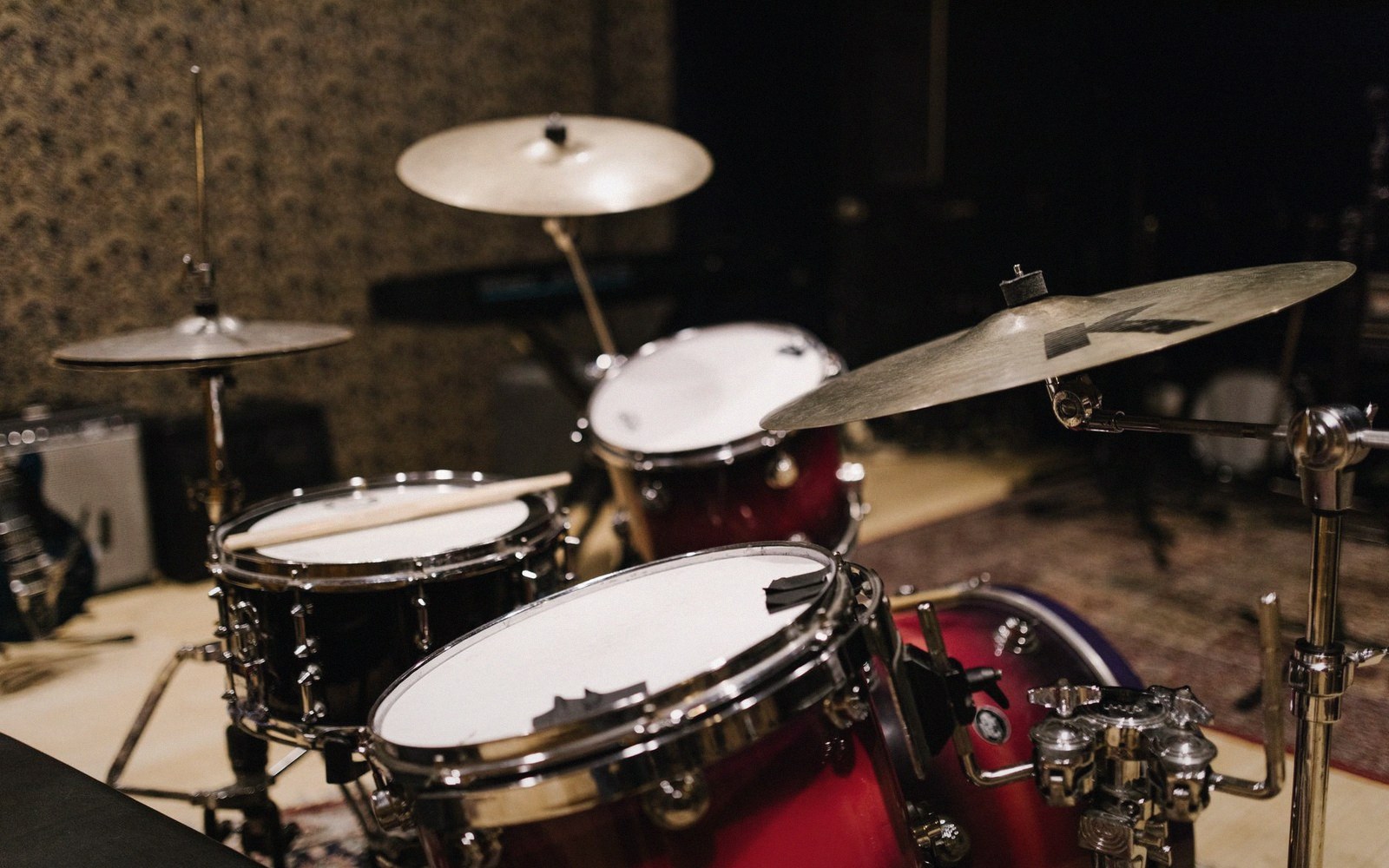
Consider four documented productions. Entombed's Left Hand Path, recorded at Sunlight Studio in Stockholm in 1989 and released in 1990 — Nicke Andersson's kit captured by Tomas Skogsberg in a room with a low ceiling and treated walls, the kick drum close-miked with next to no room bleed, the snare sitting forward and dry, the cymbals filtered far back in the mix. The result is a drum sound that punches upward into the guitars rather than lying underneath them. Everything competes for the same frequency band, which is precisely why the record sounds like it is about to collapse and never does.
Now contrast that with Dismember's Like an Ever Flowing Stream, also recorded at Sunlight, but in 1991, and the difference is immediate. Fred Estby's snare has more crack, the kick has a slightly longer decay, and the overhead placement lets the hi-hat breathe more than Andersson's does. Same room, same engineer, different drummer, different placement — and the record sits differently in a mix as a result. The guitars on Ever Flowing Stream feel slightly more separated from the kit; the drums are not competing at the same register, which lets the riff assert itself more cleanly.
Four productions at a glance
| Item | What it means |
|---|---|
| Left Hand Path (Entombed, 1990) | Sunlight Studio, Stockholm; drums close-miked, dry, forward in mix; kick and snare compete directly with guitars |
| Like an Ever Flowing Stream (Dismember, 1991) | Sunlight Studio; more snare crack and hi-hat presence; slightly more separation between kit and guitars |
| De Mysteriis Dom Sathanas (Mayhem, 1994) | Grieghallen Studio, Bergen; long room reverb, ambient bleed retained; kit sits behind guitars as atmosphere |
| Transilvanian Hunger (Darkthrone, 1994) | Necrohell Studios; minimal separation, small-room sound; constraint and aesthetic preference converge |
Room, Gate, and the Norwegian Divergence
Move north and the philosophy changes. Mayhem's De Mysteriis Dom Sathanas, recorded at Grieghallen Studio in Bergen in 1992 and 1993 and released in 1994, is the clearest illustration of what a different room and a different engineer's instincts produce. Pytten — Eirik Hundvin — chose a longer room reverb on the snare and allowed more ambient bleed into the kit mics. The result is a kit that feels vast and cold rather than close and violent. Hellhammer's playing sits behind the guitars rather than level with them, which is partly a mixing choice and partly a consequence of not gating the room sound out. Where the Swedish productions push the drums forward as a rhythmic engine, Grieghallen's aesthetic uses the kit as atmosphere. The decay of each snare hit tells you something about the space; the space is the point.
Darkthrone's Transilvanian Hunger, recorded in 1993 at Necrohell Studios — Fenriz's home setup — represents a different order of decision entirely. Here the drum production is not a consequence of engineering choice so much as resource constraint meeting aesthetic preference. The kit sounds small because it was captured in a small room with limited microphone separation. But smallness became an argument. The tightness of the sound, the absence of decay, the way the snare and kick blur together at high tempo — these created a template that subsequent productions actively imitated, not because it was easier to achieve but because it communicated something the cleaner productions did not.
What the Drums Actually Decide
The practical consequence for collectors and listeners reading sessions is this: when two productions share a label, a year, and a genre classification, the drum sound is often the fastest diagnostic. A gated kick with a short decay and minimal room tells you the engineer was working toward the Swedish model — drums as rhythm machine, subservient to the riff. A reverberant snare with audible room tone tells you the engineer prioritised space and atmosphere, the Norwegian tendency. And a kit that sounds like it was recorded in a bathroom with a single overhead is telling you that the production values were either constrained, deliberate, or both — and that the recording has more in common with a demo aesthetic than a studio one.
None of these is a failing. They are arguments. And they are arguments the drums make before the guitars ever enter.
Terms in use
| Item | What it means |
|---|---|
| gate threshold | the signal level below which a noise gate closes, cutting room sound and decay; a high threshold produces a drier, tighter drum sound |
| room bleed | ambient sound from the recording space captured by kit microphones not aimed at a specific drum; retaining it adds depth, removing it adds punch |
| overhead | a microphone placed above the kit, typically to capture cymbals and the overall kit picture; its placement affects cymbal presence and room character |
| transient | the initial attack of a drum hit; how an engineer treats transients determines whether a drum sounds sharp and present or soft and recessed |