
The economics of an independent Nordic metal label in the 1990s were not complicated — they were just brutal. A walk through the documented operational structure, from pressing order to distributor invoice.
The Infrastructure Behind the Record
Starting a metal label in Scandinavia in the early 1990s required less capital than it required nerve. The legal structure was usually a sole proprietorship — an enskild firma in Sweden, an enkeltpersonforetak in Norway — registered cheaply and quickly, giving the founder enough formal standing to open a business bank account and sign contracts. Beyond that, the operation ran on phone calls, typewritten correspondence, and the willingness to personally carry boxes of records to the post office.
The label's first job was to secure a recording. In most documented cases from this period, the label paid for studio time upfront and recouped the cost against future royalties, which meant the band began its commercial relationship with the label already in debt. Session costs at studios of the calibre of Sunlight in Stockholm or Fredman in Gothenburg varied considerably by the mid-1990s, but a typical metal album could be tracked, mixed, and rough-mastered in the range of a week to ten days, with the bill going directly onto the label's books. The band signed a standard exclusive recording agreement — usually three to five albums with options, drafted without independent legal review on either side, which would cause problems later, and did.
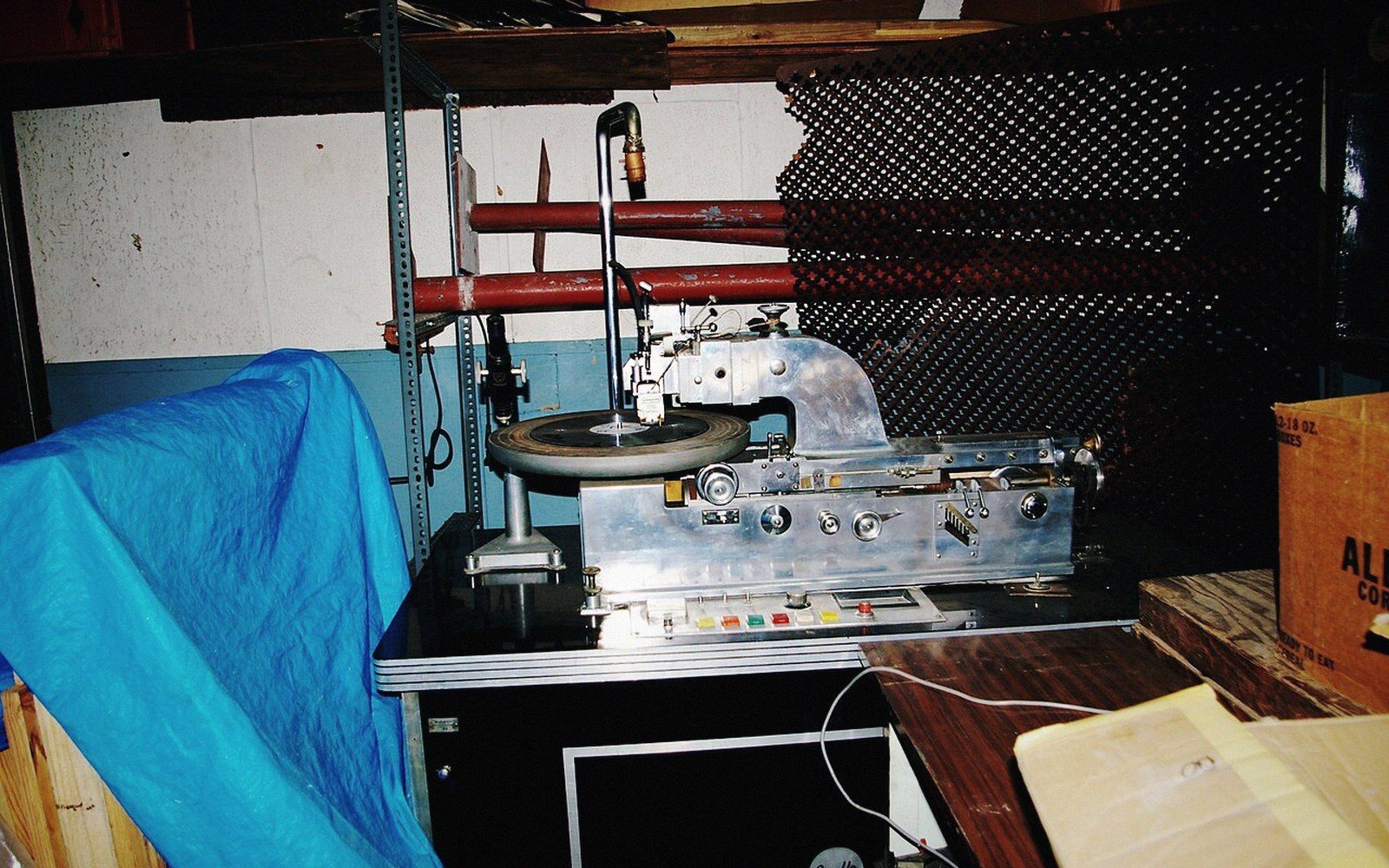
Once a master tape was delivered, the label needed a cutting engineer and a pressing plant. The mastering stage — transferring the final mix to a lacquer disc for plating — was almost never done in-house. Swedish labels frequently used Stockholm-based facilities; Norwegian labels sometimes sent masters to Denmark or Germany, where capacity was larger. The mastered lacquer went to the pressing plant, where a metal stamper was made and vinyl was pressed from it. The dominant plants serving Nordic independent labels in this period included Swedisc in Sweden and, for larger or export-oriented runs, German facilities such as Pallas in Diepholz. Contracts with pressing plants specified quantity, vinyl weight, and whether the plant would also handle sleeve printing — many did both, which simplified logistics at the cost of some flexibility in design choices.
The cash-flow chain
The Economics of a First Run
Pressing quantities on debut releases were almost universally small. A documented first pressing of a debut album from a Scandinavian underground label in the early-to-mid 1990s typically fell between 500 and 2,000 copies on vinyl, with a CD run often pressed simultaneously at similar or slightly higher quantities — CD manufacture was, per unit, cheaper than vinyl once the plant setup cost was absorbed. Labels that pressed fewer than 1,000 units of a title faced an uncomfortable arithmetic: the per-unit manufacturing cost was high, the margin on each copy sold through distribution was narrow, and the minimum needed to break even on a recording advance plus manufacturing was often just beyond what the first pressing could deliver.
The pressing plant invoiced the label directly, usually with thirty-day payment terms. That invoice arrived before the first copy had reached a shop. A label operating without a line of credit — most of them — was therefore paying manufacturing costs from its own reserves or from money still owed by the distributor on the previous release. The cash-flow structure was the source of most label failures: not poor sales, but the timing gap between paying the plant and collecting from distribution.
Distribution agreements in this period took one of three forms. The label could sell directly to retail — possible in a domestic market but unscalable. It could engage a domestic distributor who warehoused stock and handled invoicing to shops, taking a percentage of the dealer price, typically in the range of twenty to thirty percent. Or it could engage a specialist metal distributor — companies operating in Germany, the Netherlands, and the United Kingdom served as the effective wholesale layer for export sales, and their terms were similar but their payment cycles were longer. The mail-order years sit alongside this: direct sales from the label to the end consumer, bypassing the distribution margin entirely, were genuinely important to cash flow precisely because there was no intermediary taking a cut.
A label selling a vinyl LP at a dealer price of roughly 80–100 Swedish kronor in the mid-1990s would see perhaps 56–80 kronor after the distributor's margin. Against that figure sat the per-unit manufacturing cost — itself dependent on pressing quantity — plus an allocation toward the recording advance, plus sleeve printing. On a 1,000-copy run, the numbers were survivable if close to everything sold. On a 500-copy run priced to move, the label was essentially breaking even on the physical product and hoping the band's next record would perform better.
Licensing, Export, and the Atlantic Crossing
The route by which Nordic recordings reached North American listeners was almost never direct. A small Swedish or Norwegian label had no practical means of warehousing in the United States, extending credit to American distributors, or enforcing payment across jurisdictions. What it could do was license the recording to an American or Canadian label, which then manufactured its own pressing and handled domestic distribution in that territory. The licensing fee in this structure was typically a flat advance against a royalty — the advance was real money, paid upfront, and it materially changed the economics of the original release for the Nordic label. How those deals were structured across the Atlantic is its own discipline, and the terms varied considerably depending on the leverage of both parties and the profile of the band at the time of signing.
A Nordic label that had secured a North American licence on a title had, in effect, sold the right to manufacture and distribute in that territory for a defined period. The resulting American pressing was a separate physical object — different matrix numbers, different sleeve print if the licensee chose to modify anything, different distribution chain. Collectors in the current market treat original Nordic pressings and their licensed American counterparts as distinct items, which is accurate: they were made in different plants from different stampers, and the quality differential between them is often audible and visible.
Label structures and legal forms
| Item | What it means |
|---|---|
| Enskild firma | Swedish: sole proprietorship, the most common legal form for small Nordic labels |
| Enkeltpersonforetak | Norwegian equivalent; similarly low-cost to register |
| Recording agreement | typically 3–5 albums with options; rarely reviewed by independent lawyers on either side |
| Licensing agreement | flat advance against royalty, territory-specific, time-limited |
The Sleeve as a Cost Centre
Sleeve production was a genuine variable in the label's budget. A standard single-pocket jacket printed in four-colour offset litho at the pressing plant's in-house facility was the cheapest option; specialty finishes — spot varnish, embossing, reverse-board printing — cost more and were reserved for releases where the label had reason to believe the title would sell enough to absorb the premium. Black-and-white inner sleeves, lyric sheets printed on one side of uncoated stock, and recycled-weight board were not aesthetic choices — they were cost management. The relationship between a label's budget and the finished sleeve's production values is one of the most legible things in a record's physical form, and a collector who reads those choices as purely artistic is missing half the story.
Art direction in the early underground period was frequently handled by whoever in the band's orbit could draw or had access to a photocopier and a Letraset sheet. Dedicated sleeve artists — the figures who built recognisable visual identities for labels — were the exception, not the rule, and many worked for very modest flat fees or for copies of the record. The printed result went through a four-colour separation process whose limitations were considerable: dark, densely saturated artwork — which most Nordic metal imagery of this period was — reproduced inconsistently across pressings from different plants and different ink batches.
What Kept the Structure Intact
The label as a structure persisted through this period for reasons that were not primarily financial. The people running these operations were, in most documented cases, also fans of the music, often formerly in bands, and operating in a network dense enough that reputation was a meaningful currency. A label that shorted a band on royalties or failed to pay a pressing plant would know about the consequences at the next trade fair or through the zine network before the formal legal process caught up. This informal accountability is documented repeatedly in interviews with label founders from the period: the social cost of bad dealing was high and immediate.

That network also transmitted practical knowledge — which pressing plants delivered on schedule, which distributors paid reliably, which licensing partners could be trusted to file accurate sales reports. Accumulated over several releases, this intelligence was the real asset of an experienced label founder, more valuable than any single contract. A new label founder learning from scratch, without that network, faced the same brutal arithmetic with less information and fewer favours to call in. The ones who survived long enough to build a catalogue did so because they learned the operational mechanics quickly and stayed close enough to the money — the pressing plant invoice, the distribution statement, the licensing advance — to know at any given moment exactly where the margin was.