Liner notes name the guitar. They rarely name the path it took.
Reading the Signal Chain
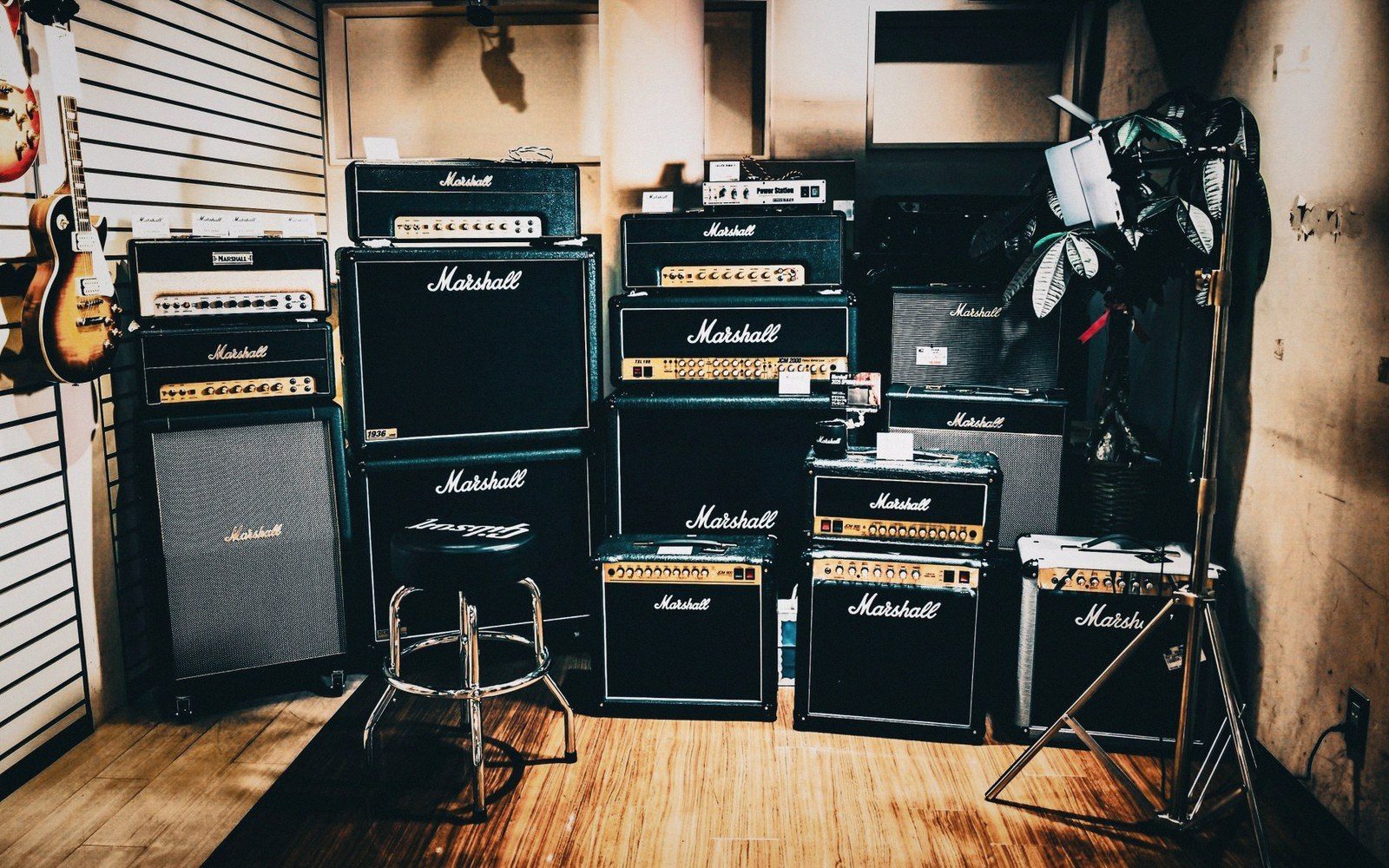
When a Nordic metal record credits a "Marshall JCM800" or a "Peavey 5150," that tells you the amplifier head. It tells you almost nothing about what happened next. The signal either hit a speaker cabinet — almost always a 4×12 loaded with Celestion Vintage 30s or G12T-75s — and was captured by a close-miked dynamic, typically a Shure SM57, or it bypassed the cabinet entirely and went direct-injected (DI) into the desk. These are acoustically distinct results, and the liner note rarely names which occurred.
Look harder. Session notes, when reproduced in reissue booklets, sometimes log "SM57 / cab" or "DI out" per track. Producer credits occasionally clarify in interviews archived in contemporary zines. The Boss HM-2 was typically run into an amplifier and cabinet, and its harsh, scooped fuzz is a key reason the Swedish death metal tone sounds so buzzsaw-like and cutting.
What the Spectrum Tells You
A cabinet-recorded guitar carries the mechanical fingerprint of speaker physics: a natural roll-off above roughly 5–6 kHz, midrange warmth from cabinet resonance, and the slight compression a loaded speaker imparts. Listen for breath in the sustain. A DI signal, uncoloured by a cabinet, extends further into the high frequencies and sounds comparatively brittle or clinical — useful for definition in dense mixes, but thin without EQ compensation at the desk.
Signal-chain terms
- DI (direct injection)recording a guitar signal straight to the desk, bypassing any speaker cabinet
- 4×12a speaker cabinet housing four 12-inch drivers; standard in metal recording
- SM57Shure dynamic microphone; the documented close-mic default for guitar cabinets
- roll-offa gradual reduction in output at a given frequency range; speaker cabinets roll off the high end naturally
On vinyl specifically, DI-sourced guitars often translate more harshly in the upper midrange — frequencies a lathe cutting head renders with less forgiveness than tape already smoothed. If a pressing sounds aggressive on a good turntable but fatiguing at volume, a DI guitar chain is a reasonable working hypothesis.
Check the runout. Check the reissue notes. The answer is sometimes there.
What to listen for