The Fanzine Was the Postal Address You Couldn't Find Anywhere Else
Before any Nordic metal label had a website, a distributor willing to answer the phone, or a press office, it had a fanzine address printed in smudged ink on a photocopied page. This is the piece that gets overlooked in scene histories: the fanzine was not primarily a critical organ. It was a logistics system.
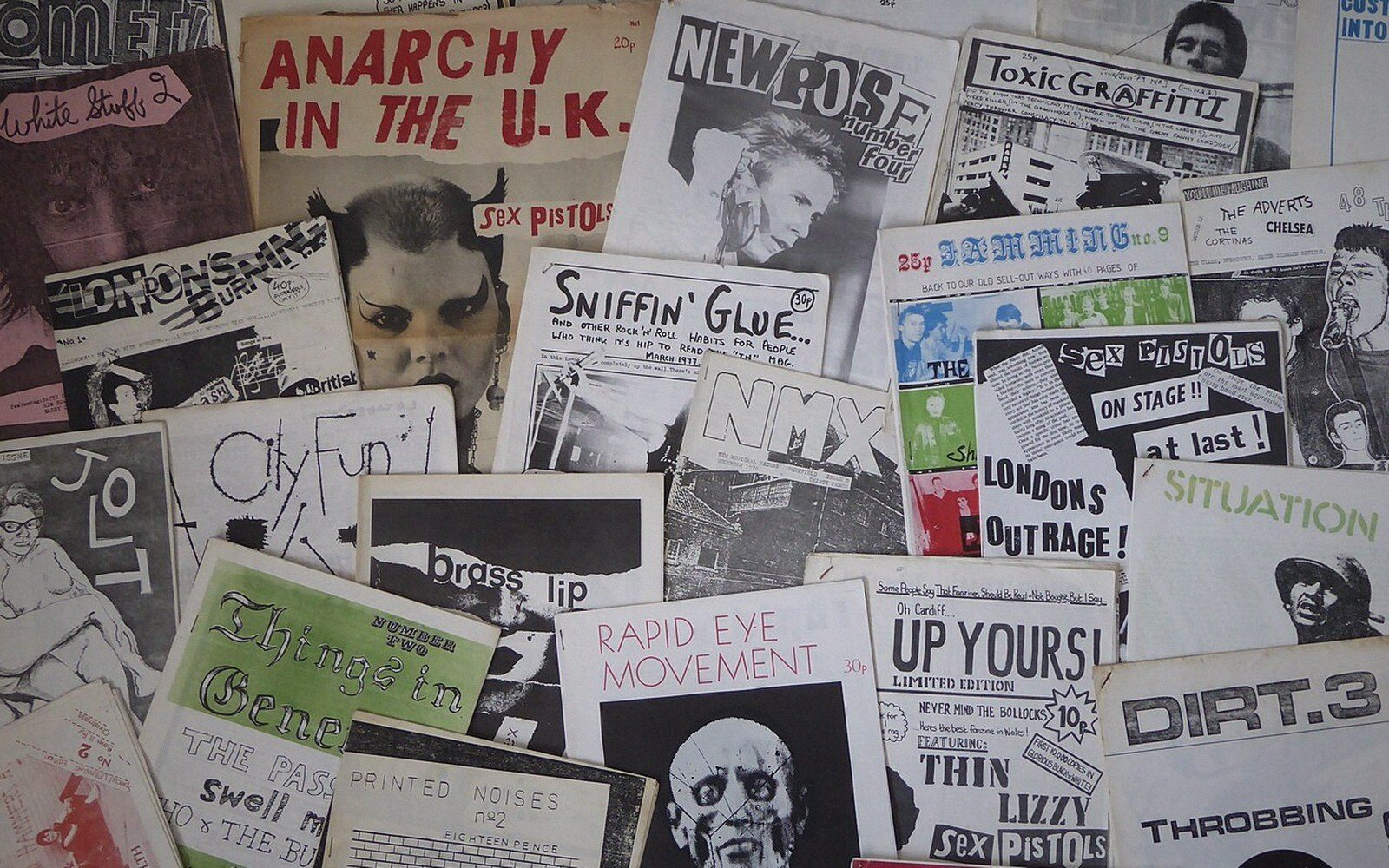
The zine — typed or handwritten, assembled on a kitchen table, reproduced on a borrowed photocopier, and mailed in an ordinary envelope — did carry reviews and interviews. But the reviews were largely pretexts. The real work was in the small-print columns: label addresses in Stockholm, Oslo, and Turku; handwritten notes from bands announcing that their four-song demo was available on cassette for three dollars or a trade; advertisements placed by pressing plants that had overstock to move; mail-order lists from operations that were labels in name only, running out of a bedroom in Gothenburg or Bergen. The fanzine was the only place this information aggregated.
Distribution of the zines themselves followed no commercial logic. Editors mailed copies directly to anyone who had written in, or traded issues with editors running parallel operations elsewhere in Scandinavia, Germany, or the Netherlands. A copy of a Finnish zine would arrive in a Dutch bedroom; the Dutch editor would copy the label addresses into their own next issue; the Finnish label would then receive orders from cities it had never heard of. The network compounded itself through duplication, and the fanzine was the replication mechanism.
How the pages worked
| Item | What it means |
|---|---|
| contact list | postal addresses for labels, bands, distros printed as the primary discovery mechanism; no other format existed |
| availability notice | operational announcement that a demo or pressing existed and could be ordered, not a formal advertisement |
| pressing announcement | first public notice of a vinyl run, often the only such notice outside the label itself |
| error correction | subsequent-issue updates when addresses changed or stock sold out; operationally important in a postal-order economy |
What the Pages Actually Contained
Read a mid-period Nordic metal fanzine closely — the kind produced between roughly 1989 and 1996, when the scene was generating records faster than any conventional media could track — and the contents arrange themselves into functional categories that have nothing to do with journalism.
First: contact lists. Labels, bands, and distros printed their postal addresses explicitly because there was no other discoverable format. A band in Tampere needed buyers in Hamburg to be able to find them, and the only route was a printed address in a zine that the Hamburg reader had acquired through a trade. Second: availability announcements. These were not advertisements in any formal sense — they were operational notices. "Demo available, dubbed to order, write for info." The tape-trading circuit ran on exactly this kind of notice; without the printed address, the cassette stayed in a drawer.
Third, and least discussed: pressing announcements. When a small Nordic label pressed a limited run of vinyl — a hundred copies, two hundred, occasionally five hundred if money allowed — the primary announcement mechanism was the fanzine. Not a distributor's catalogue, not a record shop's recommendation, not a music magazine with national circulation. The fanzine editor received a copy of the record, ran a short notice alongside whatever review they chose to write, and printed the label's address for orders. For some releases, this was the only public record that the pressing existed at all.
Fourth: error correction. Zines ran updates in subsequent issues when addresses changed, when pressing runs sold out, when a label folded. The correction function mattered because the postal address was the only interface. An outdated address meant lost money, unanswered orders, broken trust — real operational damage in a scene that ran on personal reputation across national borders.
The Economics of the Page
Producing a fanzine was cheap enough that it could be sustained on enthusiasm and a small cover price, but not so cheap that it required no commitment. Photocopier access was the primary constraint: some editors had it through school or work, some paid per-page at a copy shop, some negotiated bulk use. A print run of two or three hundred copies was typical for an established zine; a first issue might reach fifty. Cover prices, where charged, were nominal — a few coins, a stamp, or simply a trade.
The labour cost was real but unmonetised. Editors typed, cut, pasted, and stapled for hours to produce something that would be mailed out at a small loss or broken even on trades. The motivation was not profit; it was access. An editor who ran a known zine received records for review, correspondence from labels, and advance notice of pressings. The zine was, in this sense, a credential — a ticket into the supply chain rather than a product sold within it.
The production economics
| Item | What it means |
|---|---|
| photocopier access | the primary constraint on production; obtained through school, work, or paid per-page |
| cover price | nominal or absent; most distribution was by trade or direct mail, not retail sale |
| print run | typically two to three hundred copies per issue for established titles |
| credential function | running a known zine gave editors access to promos, label correspondence, and advance pressing information |
Labels understood this. Posting a copy of a new record to a dozen fanzine editors cost almost nothing and generated the only advertising infrastructure that reached the right people. The relationship was symbiotic and explicit: the label needed the address column, and the editor needed the record to review. Neither party was being naive about the arrangement.
What this produced, cumulatively, was something no single actor planned or maintained: a distributed address book, replicated across hundreds of issues and thousands of trades, that mapped the entire logistics layer of the Nordic metal economy. When mail-order became the dominant sales method for independent pressings, it worked because the fanzines had already done the cartographic labour. The catalogue and the address list existed before the label did. The zine built the infrastructure; the label moved into it.