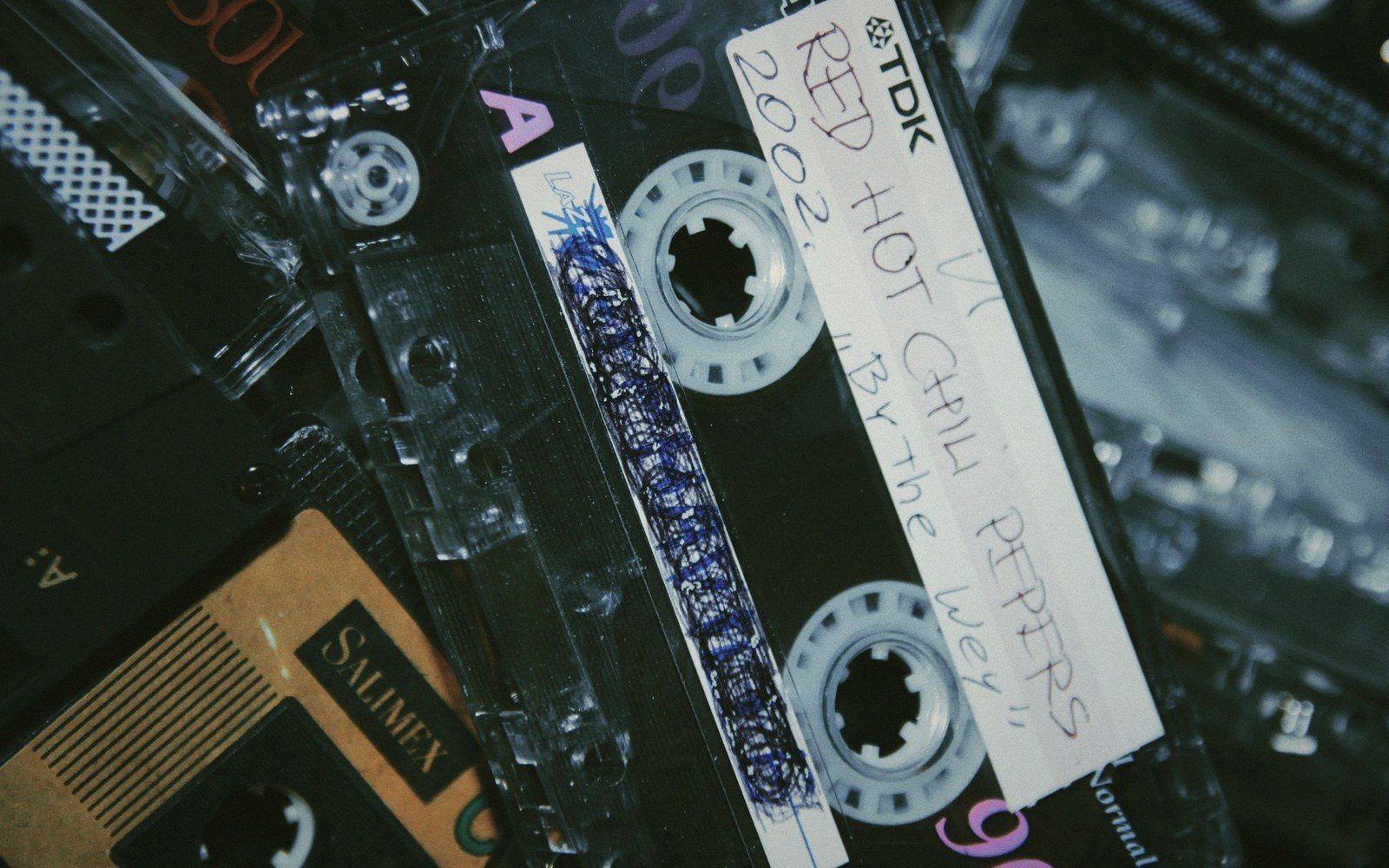
Before the label existed, the tape did its work — how cassette demos moved across borders, built scenes, and told labels where to look.
The Network Before the Network
In the years before Scandinavian metal had a settled label infrastructure, the cassette tape was the document of record. Not the record, not the CD, not even the demo reel pressed to acetate — the cassette, duplicated on a domestic hi-fi, labelled in ballpoint or Letraset, dropped into an envelope and sent to an address copied from a fanzine. The circuit that handled this traffic was not organised by any institution. It ran on correspondence, trust, and the willingness to dub a tape for a stranger in another country.
The mechanics were simple enough to describe in a sentence: a band recorded a demo, pressed copies — sometimes ten, sometimes fifty, rarely more than a hundred — and mailed them to people already known to trade. Those people dubbed further copies and passed the addresses on. A demo that connected could travel from a rehearsal room in Gothenburg to a trader in Rotterdam to a collector in Florida in a matter of weeks, with each stop adding generational loss to the audio. By the time a tape reached its fourth or fifth dub, the high frequencies had smeared and the low end had bloomed into a kind of ambient hiss. This was not considered a flaw by most people in the circuit. It was the condition of the thing.
The geography was specific. The Swedish scene concentrated in a band running from Gothenburg up through Stockholm and across to the smaller cities of the south — Malmö, Örebro, Linköping — but the circuit was never domestically contained. Norwegian traders were essential nodes, as were networks in Finland, Denmark, and the Netherlands. Germany provided volume: West German traders in the late 1980s ran some of the most active cassette-distribution operations in Europe, and a demo that reached one of the large German hubs could cascade into dozens of copies across the continent within a month. The United States, particularly the Florida death metal scene centred on Tampa and the Midwest tape-trading underground, functioned as both destination and source. Nordic bands wanted to reach American traders; American bands wanted European exposure. The Atlantic crossing happened by post.
The circuit's geography
| Item | What it means |
|---|---|
| IRC (International Reply Coupon) | postal voucher used to pre-pay return postage for international correspondence; the functional currency of the trading network |
| Dub generation | each copy removed from the original recording; quality degraded with each successive duplication; traders often noted generation on the shell |
| Chrome / ferric | the two main cassette tape formulations in common circulation; chrome (Type II) offered marginally better high-frequency response; both were used indiscriminately by most traders |
| Trader's list | a typed or printed sheet cataloguing available demos; distributed independently of trades and functioned as informal publicity |
What a Well-Travelled Demo Looked Like
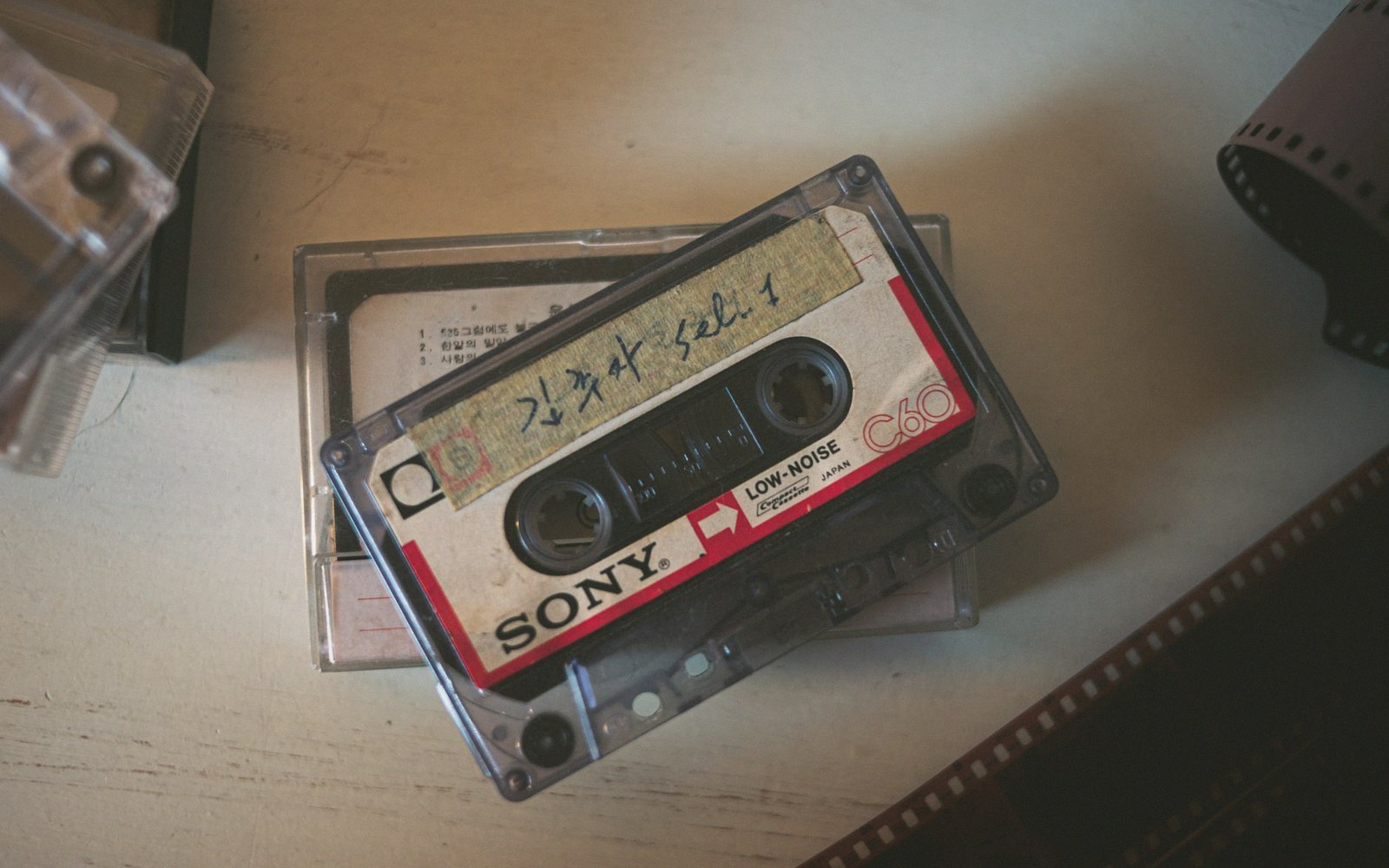
The physical object that came out of this system was recognisable to anyone who handled it. The cassette shell was typically a standard C-60 or C-90 chrome or ferric tape — Maxell, BASF, and TDK were the brands that circulated most, though the choice was often simply whatever was cheapest at the local electronics store. The inlay card, where one existed, was photocopied rather than printed: a hand-drawn or cut-and-paste logo, a tracklisting, often a contact address. Bands that had developed relationships with graphic artists sometimes produced more finished artwork, but the medium enforced a rough uniformity. The sleeve was as analogue as the music.
A well-travelled tape showed its history. Multiple generations of dubbing left a visible signature in the audio: noise floor rising, transients softening, the room around the drums expanding into a washy blur. The label on the shell itself might have been rewritten, with the original band name and title supplemented by the trader's own notation — sometimes a date received, sometimes a brief quality rating. Experienced traders developed a shorthand: a number indicating dub generation, an abbreviation for the recording quality, occasionally a personal note. This marginal text was not meant to survive; it was working data.
The envelope was equally informative. International Reply Coupons — IRCs, the postal vouchers used to pre-pay return postage across borders — were the currency of the circuit. A letter requesting a trade would typically include one or two IRCs to cover return postage, along with a list of available demos the sender could offer. This list, typed or written on a single sheet, was the trader's catalogue. The better-organised traders printed their lists and sent copies out with every outgoing package. These sheets circulated independently, passed on to people who had not requested them, and became a form of secondary publicity. A band that appeared on a well-distributed trader's list had effectively been endorsed.
How Labels Found Bands
The tape circuit and the early label infrastructure were not separate systems. They overlapped almost completely. The people who started the first Nordic metal labels in the late 1980s and early 1990s were, in most cases, already active traders or were known to traders. They read the same zines, which were the infrastructure that organised the circuit, advertised in them, and corresponded with the same network of contacts. When a label needed to find bands to sign, it did not hold auditions or attend showcase events; it listened to the demos that were already circulating and monitored which ones were generating the most traffic.
This made the circuit function as a de facto A&R system. A demo that moved — that got dubbed repeatedly, that appeared on multiple traders' lists, that was referenced in fanzine reviews — was demonstrating market interest in the most direct way available. Labels could track this movement by corresponding with traders and asking what was generating the most requests. The volume of tape traffic around a specific recording was legible evidence that something was working.
The process was slower than any digital equivalent but not necessarily less efficient for its purposes. A label evaluating a band in 1990 had access to months of accumulated response data, distributed across dozens of independent observers in multiple countries, all of whom had spent their own money and time to obtain and circulate the demo. This was genuine market signal, unmediated by radio play, press coverage, or advertising spend.
Several of the key label signings from this period followed directly from tape-circuit prominence. The demo that became a debut album often had a prior existence as a circulating cassette that the label had monitored for a year or more before making contact. In some cases the band and label were already corresponding as part of the general trade network; the label relationship formalised what was already a known connection. How a Nordic metal label worked was, at this stage, inseparable from how the tape circuit worked. The label was an intensification of the network, not a departure from it.
After the Circuit Peaked
The tape-trading circuit did not collapse; it phased out. The CD format eventually produced a new demo medium — the CDR — that was cheaper to duplicate and offered better audio fidelity, but the equipment needed to burn discs took years to become affordable and common. In the meantime the cassette remained the default, retaining value among traders who had built relationships around it and were reluctant to abandon an established system for an uncertain one.
What actually ended the circuit was not technology but infrastructure. As Nordic labels formalised during the early 1990s, the gap between demo and release narrowed. Bands that previously needed the tape circuit to reach an audience could now aim directly at labels that had press contacts, distribution deals, and production budgets. The circuit had trained those labels to find talent; once the labels were functional, the circuit's role shifted from primary distribution to pre-label exposure. It became a filter rather than a destination.
Chronology of the circuit's phases
The physical residue of the circuit is scattered. Tape collections held by traders who never discarded them sit in private storage across northern Europe and North America. Occasional boxes surface at record fairs and auction platforms, sometimes containing demos by bands that went on to release through significant labels, sometimes containing recordings that never found any other outlet. The generational degradation that was accepted as normal during the circuit's active years now makes some of those recordings difficult or impossible to transfer cleanly. The hiss is part of the archive, and it is not recoverable.
For collectors working backward from vinyl pressings and label catalogues, the tape circuit represents an earlier layer of the same history. A first pressing of a debut album from a significant Nordic band often points to a demo that circulated for a year or two before the label relationship was formalised. Finding that demo — in whatever generational state it survives — is reading the record before the record existed.